
Nobody wakes up thinking about surface coatings. You think about the burnt egg stuck to the pan, the shower door crusted with limescale, the smudged phone screen, the bus shelter someone tagged overnight. The coating is invisible. The annoyance is not. A Norwegian materials company called Nanize is working on something that targets exactly those small, daily frustrations, and the interesting part is how broadly it reaches. Nanize coatings are transforming surface protection across multiple sectors, enabling cleaner, safer, more efficient performance wherever advanced coatings are needed.
This piece is not about chemistry. It is about what changes for real people when surfaces stop fighting back.
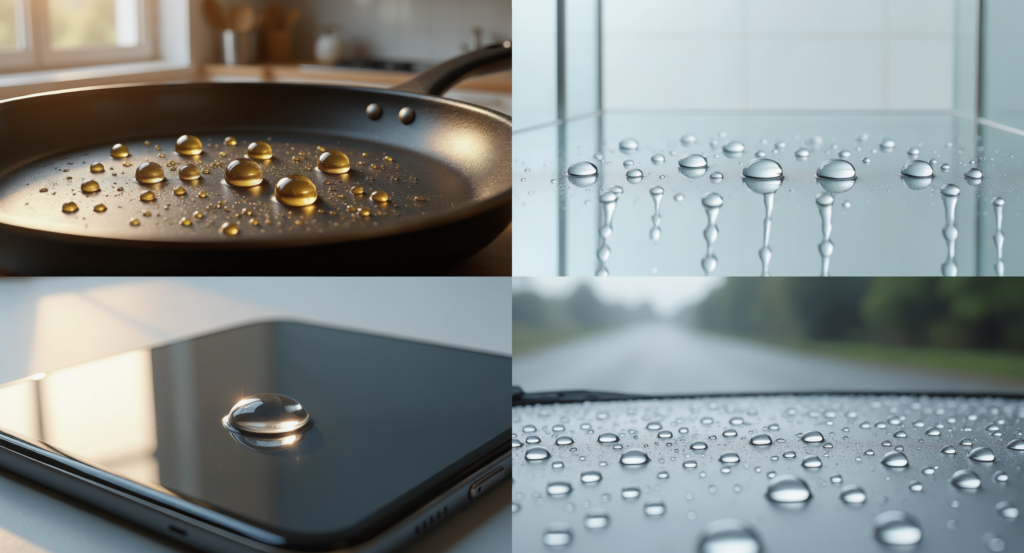
The Pan That Finally Behaves, Without the Worry
Start in the kitchen, because that is where most people first met non-stick coatings, and where they have quietly worried about them ever since. The old generation of non-stick was built on PFAS, the so-called forever chemicals, and that generation is on its way out for good reason. PFAS and other fluorine-containing compounds used in cookware and bakeware do not retain their non-stick properties, are prone to peeling off the surface, and will be banned.
That is the lived experience of a cheap non-stick pan: it works beautifully for a year, then the coating scratches, flakes, and ends up who-knows-where, including possibly in your food. Nanize’s pitch is a clean break from that cycle. Nanize FDA-compliant coatings do not contain any PFAS or Fluorine. They covalently bond to the substrate and retain their excellent non-stick performance.
The phrase “covalently bond to the substrate” matters more than it sounds. It is the difference between a coating that sits loosely on top of the metal and one that is chemically locked to it. The durability and long-life of Nanize coatings is achieved through excellent cross-linking during the curing process, combined with covalent bonding to the substrate to prevent flaking and delamination in use. For a household, that means a pan that stays non-stick for years instead of months, and one you do not have to feel uneasy about every time you reach for it.
Less Time Cleaning, More Time Living
The single biggest “easier life” benefit is mundane and universal: less cleaning. The reason comes down to how the coated surface treats water and grease. Despite eliminating PFAS entirely, Nanize’s formulations deliver exceptional hydrophobic and oleophobic properties, resisting water, oils, and a wide range of contaminants. Hydrophobic repels water; oleophobic repels oil. Together they mean grime never really gets a grip in the first place.
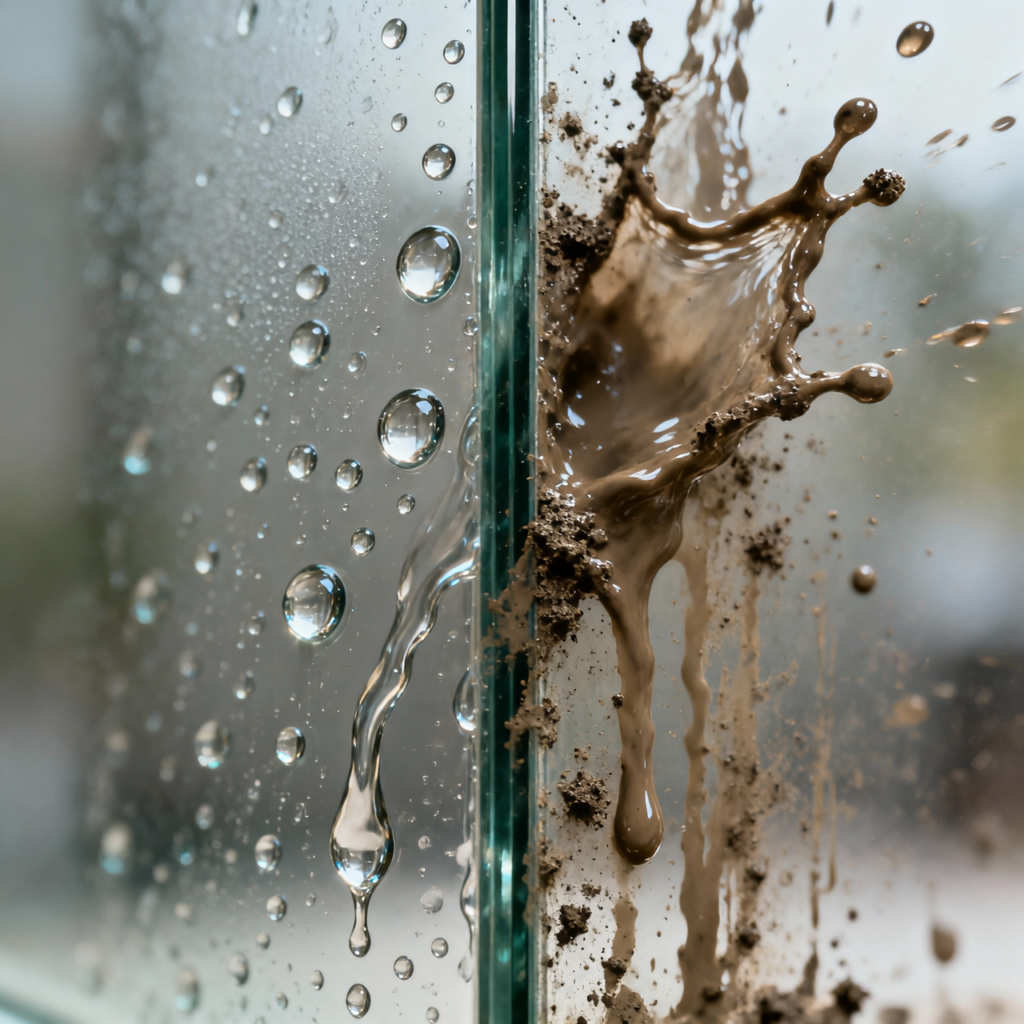
The real-world effect of repellency like this is well understood in the coatings world: when liquid beads up instead of spreading, it rolls off and carries dirt away with it, the basic mechanism behind self-cleaning surfaces. Dynamic measurements such as advancing angle, receding angle, contact angle hysteresis, and roll-off angle are better predictors of self-cleaning performance than static readings alone. A roll-off angle below 10° indicates that droplets will slide freely, carrying contaminants with them.
Nanize is explicit that this translates into easier upkeep across the board. Its hydrophobic and oleophobic surfaces repel water, oil, and other contaminants, ensuring easy-clean surfaces. The honest summary from its own coverage is the one most people would actually feel: the result is a durable, easy-clean surface ideal for environments where appearance and hygiene matter. Shower screens that do not scale. Appliance fronts that shrug off fingerprints. Windows that streak less. None of it is glamorous, and all of it gives you back time.
The Phone, the Car, the Screens You Touch All Day
Move from cleaning to the gadgets you handle constantly, and the benefit shifts to wear and clarity. Touchscreens take a beating from fingers, pockets, and grit, and so do the optical surfaces in cameras and sensors. Nanize aims squarely at that. In the electronics sector, manufacturers are using the coatings to protect touchscreens, optical components, and solar modules from smudging and abrasion.
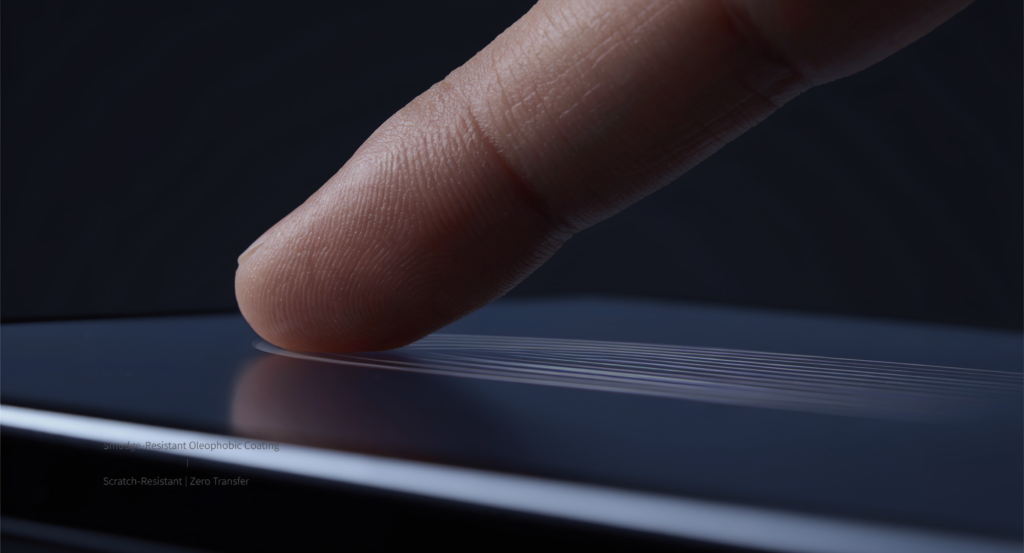
A smudge-resistant, scratch-resistant screen is a small luxury that compounds over the life of a device. And the durability is not marketing fluff layered on a soft film. Nanize coatings fully cure in under one minute below 70°C to create market-leading, hard, scratch-resistant, long-life surfaces. The same toughness that protects a phone protects the headlamp covers and sensor housings on a modern car, the parts that, when scratched or fogged, quietly degrade everything from night visibility to the cameras driver-assistance systems rely on.
The City You Walk Through
Step outside, and the impact becomes communal rather than personal. The surfaces of public life, building façades, bus shelters, signage, glass, are under constant assault from weather, pollution, and vandalism, and the cost of keeping them presentable falls on everyone. This is where a stay-clean, anti-graffiti coating quietly pays for itself.
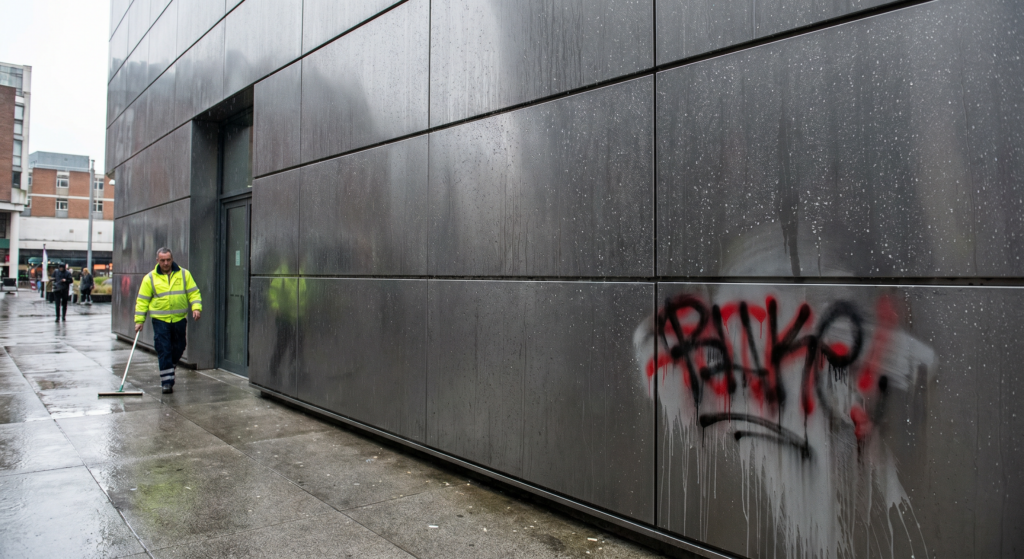
Nanize treats the building material before it ever goes up. By applying a Nanize polysilazane formulation coating to the typically used steel or aluminium building skin material, followed by ultra-rapid curing in a high-throughput manufacturing process, a durable, corrosion-resistant surface that is hydrophobic, non-marking, anti-graffiti, and not prone to soiling is created. The payoff is the kind a city budget actually notices. The benefits of creating a long-life building skin that retains both its architectural appearance and functional performance whilst not requiring frequent cleaning from the build-up of dirt or the removal of graffiti are both economic and aesthetic.
The company frames the anti-graffiti use as tailor-made for shared spaces. Its enhanced anti-graffiti performance is perfect for public infrastructure, where maintaining aesthetics and cleanliness is crucial. Fewer cleaning crews dispatched to scrub tags, fewer corroded panels swapped out, and streets that simply look cared-for for longer. That is “easier life” at the scale of a whole neighbourhood.
Cleaner Energy, Quietly
There is one more impact that touches everyone indirectly: the things that power our lives run better when they stay clean. Dirt on a solar panel or a turbine blade is invisible to us but expensive in lost output and maintenance shutdowns. Nanize coatings have a high degree of hydrophobicity and an extremely low coefficient of friction that significantly reduces the build-up and adhesion of dirt on the surfaces to which they are applied. Through the use of Nanize polysilazane formulations and the ultra-rapid curing process, renewable energy generation performance of solar modules and wind turbines can be improved with a corresponding reduction in the need for downtime to undertake cleaning.
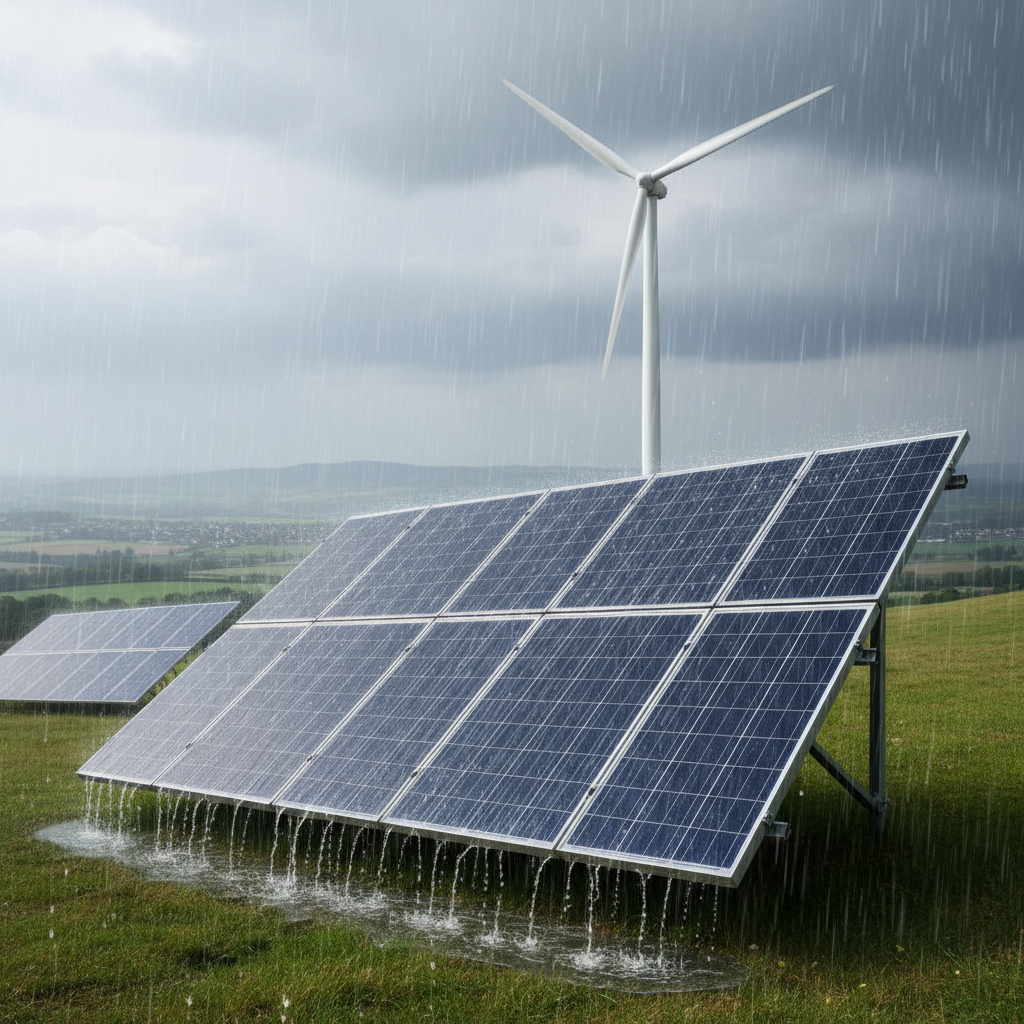
More output and less downtime from the clean-energy infrastructure feeding the grid is a benefit you never see but everyone shares.
The Healthier, Greener Footnote That Is Actually the Headline
Two threads run underneath all of this and quietly make every example better. The first is health. Several of the surfaces above are things we eat off, touch constantly, or share with strangers, and Nanize tunes its coatings for hygiene as well as cleanliness. Medical device makers and cookware brands also benefit from long-lasting, bacteria-resistant finishes that support safer, healthier products.
The second is the environmental case, which is what makes the whole story sit right rather than just sound clever. Replacing forever chemicals is the obvious win, but it goes further. Beyond regulatory alignment, the technology reduces manufacturing waste and supports greener production practices, a key factor driving interest from sustainability-focused corporations. A coating that lasts longer also means objects that last longer, and there is a real ecological logic to that. Using UV-protectant and scratch-resistant nanocoatings on surfaces preserves the original look and properties of objects, extending their lifespan and reducing waste. Nanocoatings are widely used to extend the lifespan of products by preventing environmental damage, scratches, corrosion, color fading, and stains, which enhances the product’s durability and economic value.
So What Actually Changes?
Strip it all down and the impact of a technology like this is not one dramatic thing. It is a hundred small ones. A pan you trust for years. A shower screen you wipe less. A phone that resists smudges. A car whose sensors stay clear. A building that cleans itself in the rain. A bus stop that loses its graffiti in one pass. Solar panels that quietly pull a little more from the sun.
The reason one company can plausibly claim all of that is breadth of fit. The versatility of Nanize’s PFAS-free coatings is accelerating adoption across multiple industries, with engineers applying the technology to wind turbine blades, exterior body panels, and other components that demand ultra-smooth, low-drag surfaces. And the company is candid about who it ultimately serves: not just factories, but the products that reach all of us. Powered by its polysilazane chemistry, Nanize is rapidly becoming a preferred partner for automotive, aerospace, electronics, medical, and consumer-goods manufacturers seeking next-generation surface protection.
A worthwhile note of caution: Nanize is still a young company scaling up, and the broadest claims about its performance come largely from the company and its own coverage rather than long-term independent field results, so the true test will be how these surfaces hold up over years in real kitchens, real cities, and real weather. But the direction is clear. The best technologies are the ones you stop noticing, the upgrade that just makes the friction of daily life quietly disappear. If Nanize delivers, you will never see it. You will only notice that things stopped sticking, staining, and wearing out so fast.