
Most deep tech stories start in Silicon Valley or a university spinout near Boston. This one starts in Narvik, a Norwegian port town above the Arctic Circle better known for fjords and freight trains than frontier materials science. That is where a company called Nanize has set up shop, and the thing they are chasing is audacious. They want to build a better Teflon, and they think a town of fewer than twenty thousand people is the right place to do it.
A serial founder, a materials scientist, and a coatings veteran
The bet is being placed by an unusual trio. The company has roots going back a few years. According to company records, Nanize was founded in 2019, is legally registered as Nanize AS, and lists Håvard Lillebo among its founders.
Lillebo is not a first-timer. He describes himself as a serial deep tech entrepreneur, with over two decades of experience and more than $140 million raised across his ventures. At Nanize he serves as CFO, and he is blunt about what the company is aiming to become. In his words, it is the next Teflon company, “without the bad stuff, and much more durable.”
The science side is led by a founder with the academic credentials to match the ambition. Dr. Kingsley Iwu serves as Founder and CTO, holding a PhD in Material Science with a specialization in nanotechnology, and leading the company’s work on advanced coating technologies.
Running the commercial operation is a leader brought in for his experience in turning innovation into scaled products. David Hogg serves as CEO, bringing more than 30 years of experience in the solar industry and a strong track record in commercializing technologies and scaling operations, including his role as former COO of Suntech.
Supporting the commercial strategy is Chief Commercial Officer Jerry Stokes, who has spent decades in the solar and battery sectors and built a $2 billion revenue portfolio at Suntech.
This piece is not about chemistry. It is about what changes for real people when surfaces stop fighting back.

That mix matters. Plenty of materials breakthroughs die in the gap between a promising lab result and a process a factory can actually run. Nanize built its leadership around closing that gap.
The problem they decided to attack
The opportunity comes down to a single ugly acronym: PFAS. These are the “forever chemicals” that make Teflon and countless other coatings work, and the world is rapidly turning against them. Industry analysts describe PFAS as artificial chemicals prized because they repel water, grease, and stains, but warn that mounting evidence has linked them to serious diseases including cancers, liver damage, and immune system effects, prompting regulators worldwide to act.
The regulatory clampdown is creating a real, measurable market. One market analysis values the PFAS-free coatings market at USD 1.5 billion in 2024 and projects it will reach USD 2.1 billion by 2030, growing at a compound annual rate of 5.9% between 2025 and 2030. The same analysis points out why this transition is hard: switching away from PFAS often means costly raw materials, complicated processes, and investment in specialized equipment and trained staff, which can make the alternatives uncompetitive on price.
That cost problem is the exact wall Nanize says it can climb. The company positions itself as a materials innovation firm developing PFAS-free coatings that replace traditional fluorinated chemicals across packaging, textiles, consumer products, and industrial sectors, supporting manufacturers under growing global pressure to eliminate PFAS.

Why a “dream material” sat on the shelf for years
The material Nanize chose to build on is polysilazane, a silicon-nitrogen compound. On paper it solves the PFAS problem cleanly. One of the company’s investors describes it as a coating that carries none of the environmental or health risks of Teflon, is stable at high temperatures, and resists moisture, corrosion, and acids, calling it the stuff of dreams.
The catch was always manufacturing. That same investor account explains the problem with refreshing honesty: the material was impractical because curing it onto anything took weeks, and there are no industrial manufacturing processes anywhere that are measured in weeks. A coating nobody can apply at factory speed is a science fair project, not a business.
The technical reason is specific. Conventionally, the hydrolysis that cures polysilazane needs either many days at room temperature or shorter periods above 250°C with a catalyst, and curing above 250°C rules out plastics and electronic components entirely. So the material was stuck: too slow to be practical, or too hot to be useful on most surfaces.
The breakthrough, in seconds rather than weeks
Nanize’s claim to fame is that it broke that tradeoff. The patented technology achieves near-perfect cross-linking and covalent bonding to the substrate through hydrolysis of polysilazanes in under one minute and below 70°C. The investor account puts it more dramatically, saying Nanize figured out how to cure polysilazane not in days, hours, or minutes, but in seconds.
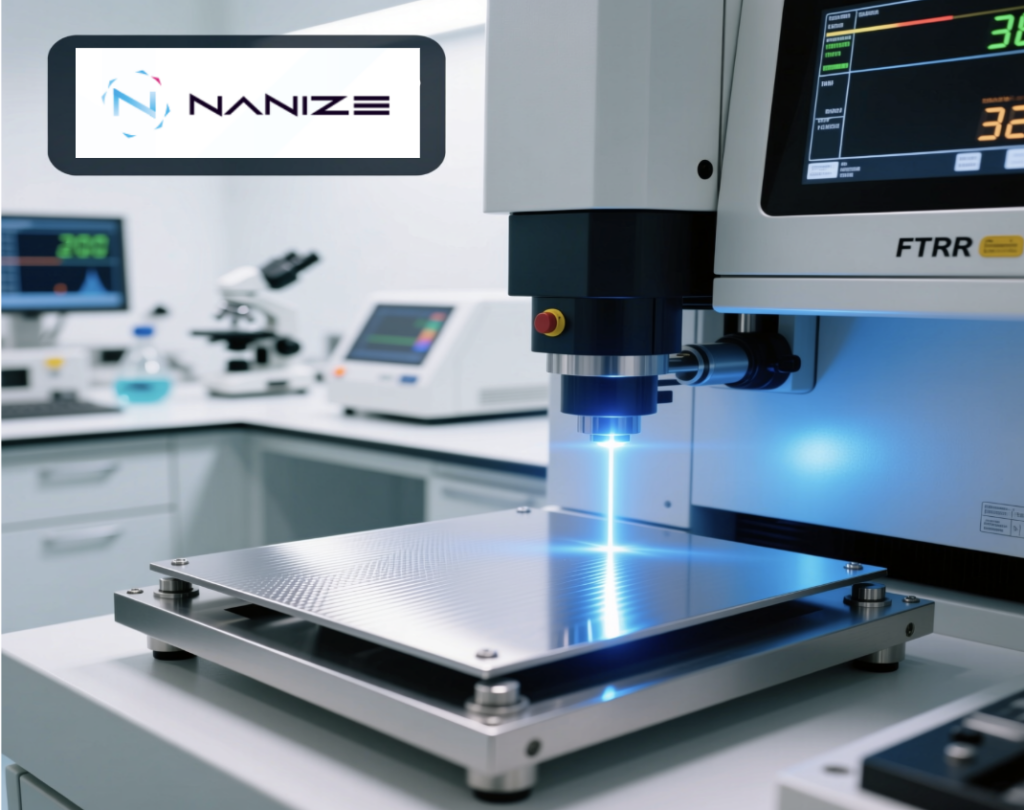
This is not a one-off lab demonstration. According to the company, it has run more than 20,000 individual tests, with extensive validation including FTIR spectroscopy to verify polymer crosslinking, hard curing, durability, and performance. The result, they say, is a hard, glass-like, three-dimensional structure that is covalently bonded to the surface it sits on, which is what stops it from flaking or peeling off in use.
And then there is the headline number that gets engineers talking. Friction is measured by a coefficient of friction, where lower is slicker. Lillebo states plainly that the company developed the world’s most slippery material, with a coefficient of friction as low as 0.008 demonstrated. For comparison, Teflon sits around 0.04, and even an exotic record-holding alloy reached only 0.02 but was nearly impossible to use because it would not stick to anything.
Funded, and pointed at real customers
The company has attracted backing to match the story. Investor records list Arctic Investment Group, Deep Future, and Valinor AS among those who have put money into Nanize. Lillebo has publicly described the company as funded with €5.7m, and says its edge rests on a portfolio of three patented and two patent-pending technologies.
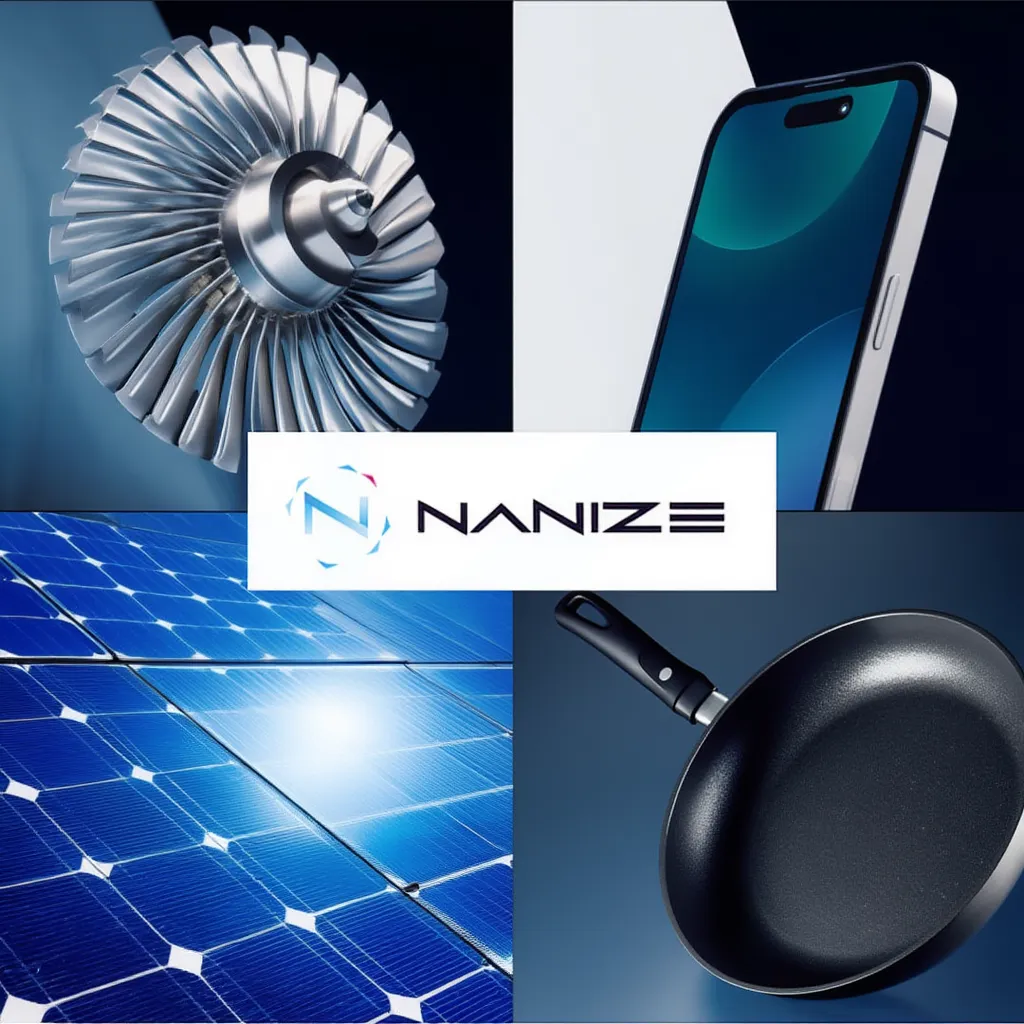
Where the coating ends up is deliberately broad. The company describes formulations tuned for different jobs, and recent coverage notes that aerospace and automotive engineers are applying it to wind turbine blades and body panels, electronics makers are using it to protect touchscreens, optical parts, and solar modules, and medical device and cookware brands are after long-lasting, bacteria-resistant finishes. The cookware case is especially timely, since fluorine-based non-stick coatings tend to lose their properties, peel, and now face bans, while Nanize markets an FDA-compliant coating that contains no PFAS or fluorine and bonds directly to the pan.
The honest caveats
It is worth keeping perspective. Nanize is still a small company, with profiles listing roughly eight employees, and the bold comparisons it draws, including likening its durability to space-grade coatings developed by NASA, come largely from the company and friendly coverage rather than independent audits. The broader PFAS-free field is crowded and competitive, with established chemical giants and specialist startups all chasing the same regulatory tailwind, and analysts caution that PFAS-free options frequently carry price premiums of 30 to 50 percent over conventional coatings.
What sets Nanize apart, if its claims hold up under customer scrutiny, is not just the slick number but the manufacturing fit. The company insists its process slots into existing industrial lines, whether roll to roll, sheet to sheet, or piece by piece, on steel, aluminium, glass, and plastic. In an industry where the hard part has never been the chemistry but the scaling, that is the promise that actually matters.
The bigger bet
Strip away the technical detail and Nanize is a wager on timing. The world spent a century building everything around a chemical it now wants to abandon, regulators are forcing the change, and the companies that can deliver a drop-in replacement at factory speed stand to win a market worth billions. A small team in an Arctic port town thinks it has the missing piece. The next few years, and a few large customers, will decide whether they are right.