
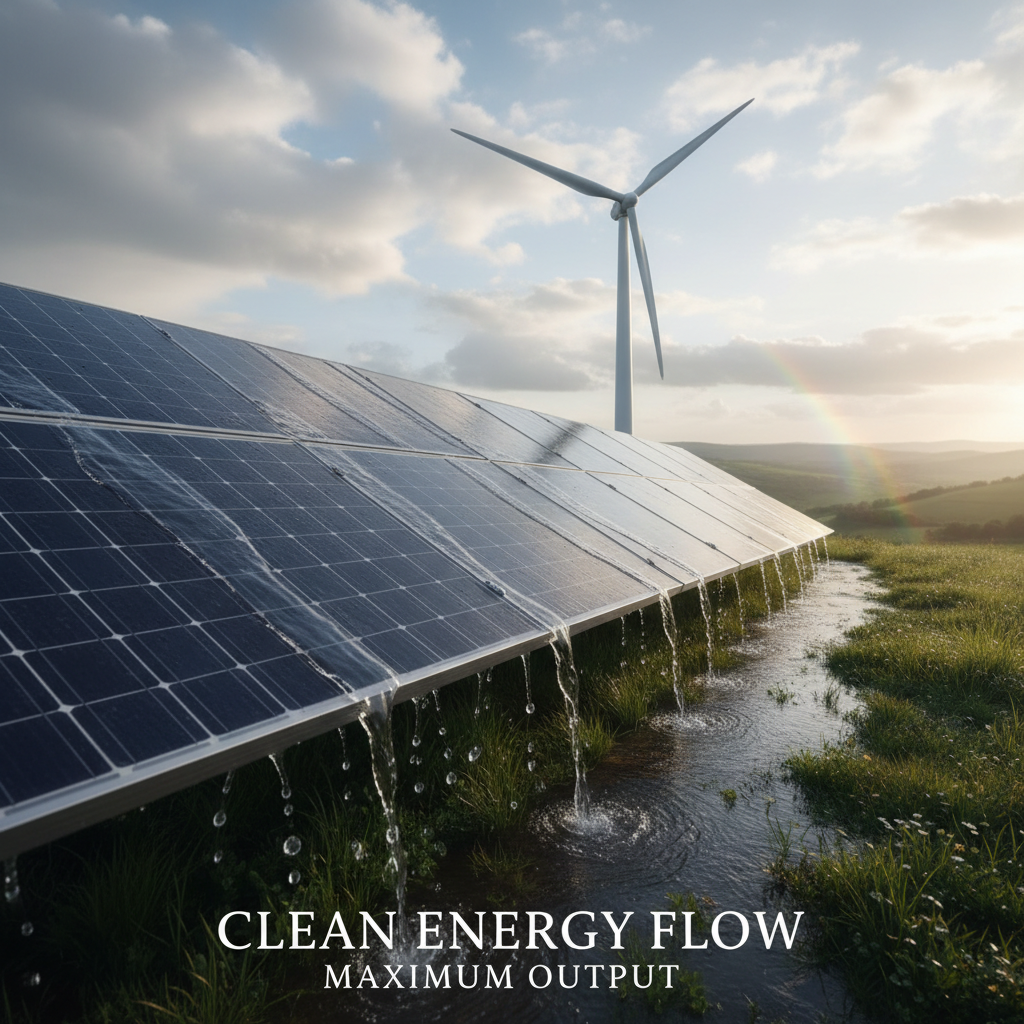
Cleaner Energy, Less Waste: The Sustainability Case for Nanize Coatings
When people think about surface coatings, sustainability is rarely the first thing that comes to mind. Yet coatings sit at the intersection of several environmental questions at once. What chemicals are in them? How much energy does it take to apply them? And once they are on a surface, do they help that surface do its job better and last longer? Nanize’s polysilazane technology touches all three of these, and together they form a quietly compelling environmental story.
Starting with what’s left out: no PFAS
The most direct sustainability claim is about what the coatings do not contain. Traditional high-performance coatings have long relied on PFAS, a class of fluorinated chemicals that persist in the environment. Nanize’s entire platform is built to avoid them. The company is explicit that, unlike traditional solutions, Nanize coatings are PFAS-free and are customisable to confer specific desired performance such as anti-adhesion, non-wetting, extremely low coefficient of friction and other properties with no harmful chemicals.
This is not a side benefit, it is the foundation of the company’s positioning. Nanize is a materials innovation company focused on developing PFAS-free coatings that replace traditional fluorinated chemicals across packaging, textiles, consumer products, and industrial sectors, designing protective surface technologies without persistent pollutants. Removing forever chemicals from the equation is the single clearest environmental contribution the technology makes.
Helping clean energy run cleaner
The second part of the story is about performance in renewable energy, where small efficiency gains add up across years of operation. Dirt on a solar panel or a wind turbine blade quietly reduces output and forces maintenance shutdowns for cleaning. A surface that stays cleaner on its own helps on both counts.
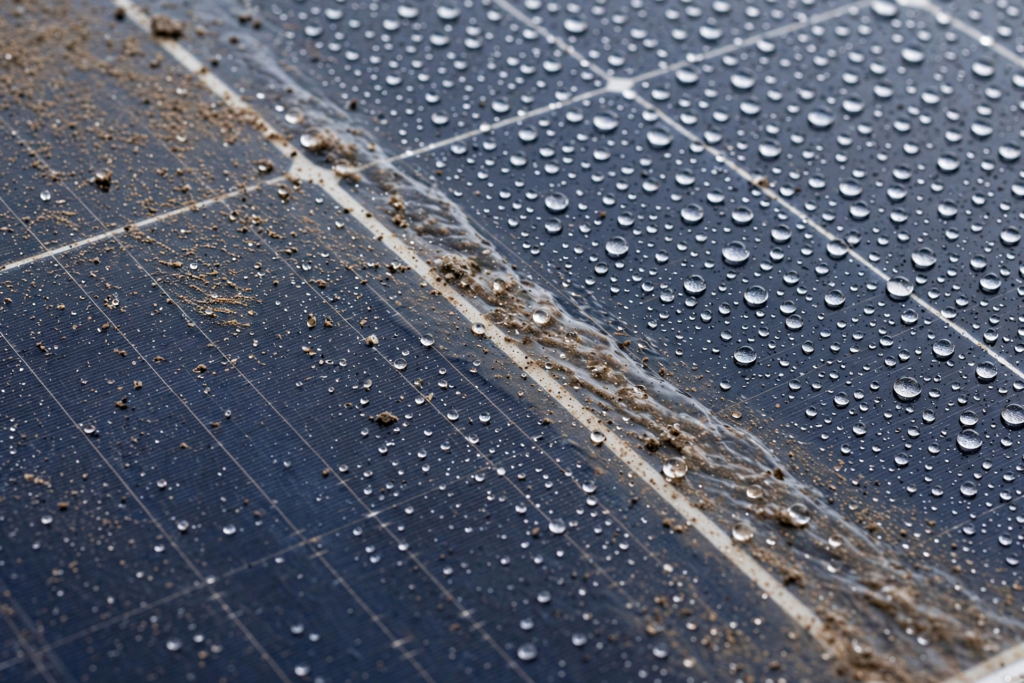
Nanize lists renewable energy among the applications its coatings serve, noting that manufacturers use them to protect solar modules from smudging and abrasion. The mechanism behind this is the coating’s water-shedding behaviour. Nanize coatings have a high degree of hydrophobicity and an extremely low coefficient of friction that significantly reduces the build-up and adhesion of dirt on the surfaces to which they are applied. Less dirt clinging to a panel or blade means more of the surface stays productive, and less downtime is spent cleaning it.
A cure that uses less energy
The third environmental thread runs through manufacturing itself. Applying a coating has its own footprint, and curing is usually the most energy-hungry step. Conventional high-temperature curing burns a lot of energy. Nanize’s process is designed to avoid that.
The company states that its coatings fully set at temperatures below 100°C, drastically reducing production cycles, and consume less energy than high-temperature curing processes. On its own site it restates the figures, noting that the coatings fully cure in under 1 minute below 70°C. A cure that runs cool and fast does two sustainable things at once: it uses less energy per part, and it speeds up production, which improves the efficiency of the whole line.
Durability as a form of sustainability
There is a less obvious environmental angle worth drawing out: things that last longer create less waste. A coating that flakes off after a short time has to be reapplied or the part replaced. A coating that stays bonded extends the useful life of whatever it protects.
Nanize ties durability directly to its bonding chemistry. The durability and long-life of Nanize coatings is achieved through excellent cross-linking during the curing process, combined with covalent bonding to the substrate to prevent flaking and delamination in use. The company frames the finished surface as long-lasting, describing coatings that fully cure in under 1 minute below 70°C to create market leading hard scratch-resistant long-life coatings. A longer-lasting surface means fewer replacements, less maintenance, and less material thrown away over time.

Tuning protection for greener products
Because the chemistry is adjustable, the same platform can support sustainability across very different products. The ability to bond nano-additives to the backbone lets Nanize tune for properties like corrosion resistance and anti-microbial performance, which extend the life and safety of the things they protect. According to Nanize, that bonding can, upon curing, confer characteristics such as super-hydrophobicity, operation at temperatures up to and above 1000°C, anti-microbial, corrosion resistance. Each of these, in its own way, helps a product last longer or perform better, which feeds back into the broader theme of using less and wasting less.
The bigger picture
What makes the sustainability angle interesting is that it is not bolted on. It falls out naturally from how the technology works. A coating with no forever chemicals is cleaner by design. A cure that runs cool and fast uses less energy by design. A surface that sheds dirt helps clean-energy equipment by design. And a layer that bonds rather than flakes lasts longer by design. None of these are separate features. They are different views of the same underlying material.
For an industry under growing pressure to cut both pollutants and energy use, that combination is the point. Nanize’s pitch is that performance and sustainability do not have to be traded against each other, and that a single well-engineered coating can serve both at once.