
What manufacturers need to see before scaling a new coating.
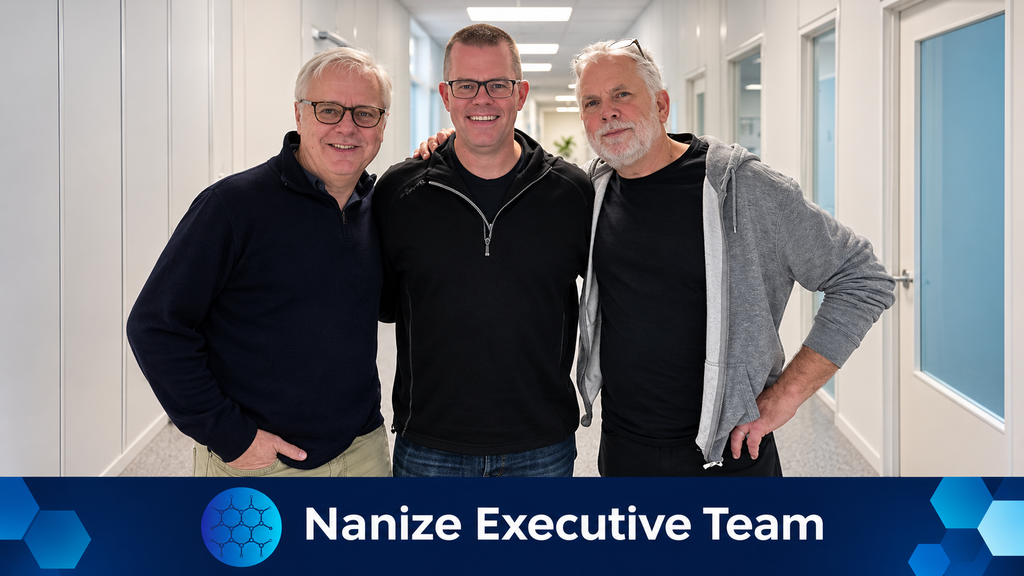
The ten-thousandth panel off a coating line needs the same finish as the first. A manufacturer evaluating a new coating has to know how it will behave as batches change, operators switch shifts and orders grow. David Hogg, Chief Executive Officer of Nanize, brings an engineering and manufacturing background to the challenge of moving a surface technology from the laboratory into repeatable production.
Hogg trained as a mechanical engineer at the University of New South Wales and began his solar career commercializing technology developed by university researchers. He was a founder and CEO of CSG Solar in Germany, went on to become Chief Operating Officer of Suntech, and was appointed CEO of Innotech Solar in 2012. Those roles spanned the development of new technology, factory operations and the work of supplying customers across markets.
Why the curing step matters to a factory
Nanize, based in Narvik, Norway, develops PFAS-free polysilazane coatings and rapid curing technology. Its formulations can create a hard, ceramic-like surface on compatible materials. An application can be designed for a specific property, such as easier removal of marks on architectural panels or lower friction on a component that slides against another surface.
Nanize reports that selected coatings on tested metal substrates reached full cure in less than a minute below 100 °C. The curing step can influence how much space a line needs and how much heat a part sees. The factory also needs time for surface preparation, application, handling and inspection. Hogg’s manufacturing background is relevant to assessing the entire process, including how many acceptable parts it can produce during a shift.
What a panel maker could learn from a pilot
Consider a manufacturer producing painted aluminum cladding. An easier-to-clean finish could interest architects and property managers, while the plant has to meet its color, gloss and adhesion requirements. Running a candidate coating on the existing panel construction would give the plant a way to see whether it can achieve consistent coverage at edges and across the face. Weathering and cleaning tests would then show how the finished panel behaves in use.
A trial can also reveal where a process change creates extra work. If applying the finish adds a handling step or slows inspection, those costs belong in the comparison. If the coating reduces rework or the customer can maintain the panel more easily, those gains can be measured. Looking at cost per acceptable panel gives the plant and its customer a common basis for deciding whether to proceed.
The decision draws on several parts of Nanize’s executive team. Dr. Kingsley Iwu leads the technical work behind the formulation. Chief Commercial Officer Jerry Stokes brings in the requirements of the customer and its supply chain. CFO Håvard Lillebo brings the finance perspective. For Hogg, the operational question is whether the coating can meet a customer’s specification at the required production volume.
Working with Nanize on industrial production
Nanize is seeking manufacturers, coating equipment suppliers, contract applicators and investors interested in bringing functional surfaces into industrial production. The company also welcomes invitations to manufacturing and coatings events where producers can discuss scale-up. A prospective partner can open a conversation with Hogg by sharing the part, the current process and the quality or maintenance problem it wants to address.
David Hogg, Chief Executive Officer | dh@nanize.com | www.nanize.com
Sources Nanize leadership · Suntech leadership filing · Innotech Solar CEO announcement · Nanize coating technology · Nanize applications