
How a surface problem becomes a project with a customer.
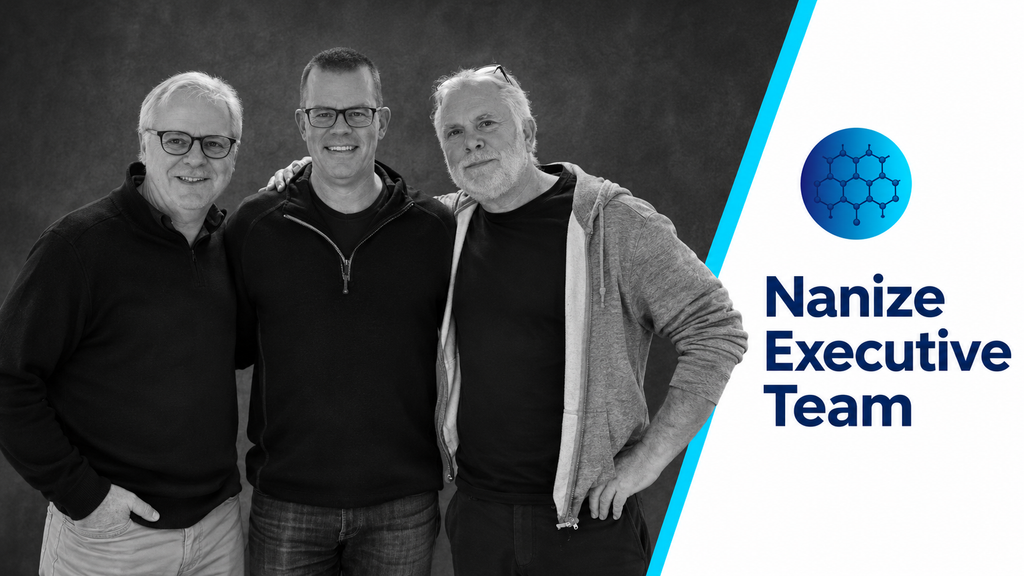
A film converter may want marks to wipe easily off a clear protective film. A bakeware maker may want a tray that still releases cleanly after repeated use. Finding the point where a specific coating can help is the commercial work of Jerry Stokes, Chief Commercial Officer of Nanize. It starts with understanding what a customer needs the finished surface to do.
Stokes earned a degree in metallurgy from Brunel University and held commercial roles at Sanyo Energy UK and AEA Technology Battery Systems. He joined Suntech through its acquisition of the Japanese solar company MSK and became president of Suntech Europe. He also serves as a Senior Advisor to the Global Solar Council. Across those roles, customers and suppliers had to agree on performance, production capacity and how a product would reach its market.
Matching the coating to the buyer
Nanize develops PFAS-free polysilazane coatings and rapid curing technology for compatible metals, glass and plastics. Its formulations can be tailored for lower friction, easier cleaning or other surface properties. In a 2026 feature in Innovation News Network, Stokes described applications ranging from protective films and displays to industrial equipment. The range matters commercially because different companies value different outcomes from a coating.
A film converter evaluating a clear TPU film may need to retain gloss, transparency and flexibility while making marks easier to remove. Nanize has reported marker-removal tests on treated TPU. A film supplier can use those results as a starting point and evaluate the finish against the reference film, installation process and cleaning products it expects customers to use.
Building the case with a commercial partner
A bakeware evaluation would start with a different set of requirements. An equipment supplier and bakery operator could compare a candidate surface with the tray already in service. The supplier can assess how the coating holds up through repeated baking and washing. The operator can track sticking, cleaning time and the number of trays taken out of service. The buyer can also specify the evidence it needs for the finished tray’s intended food-contact use.
The buyer who sees the problem and the supplier who can make the change are often different organizations. A film brand may set appearance requirements while a converter runs the coating line. A bakery operator may report sticking while the tray manufacturer controls the finish. Stokes’s commercial role brings those groups into the same discussion so the first evaluation addresses a real purchase decision.
A project can start with four details. The parties identify the part, describe where the current finish falls short, name the performance target and agree how they would measure it. Those details give Nanize’s scientists a basis for selecting a candidate formulation and give the buyer a way to assess whether the trial merits further work.
Customer partnerships and international events
Nanize is actively seeking clients, development and distribution partners, investors and opportunities at industry events worldwide. Stokes welcomes discussions with manufacturers, applicators, converters and organizers of materials or manufacturing forums. For an application inquiry, a representative part or film and a description of its use give both teams a place to start.
Jerry Stokes, Chief Commercial Officer | js@nanize.com | www.nanize.com
Sources Nanize leadership · Suntech leadership filing · Global Solar Council profile · Innovation News Network coating feature · Nanize coating technology · Nanize applications