
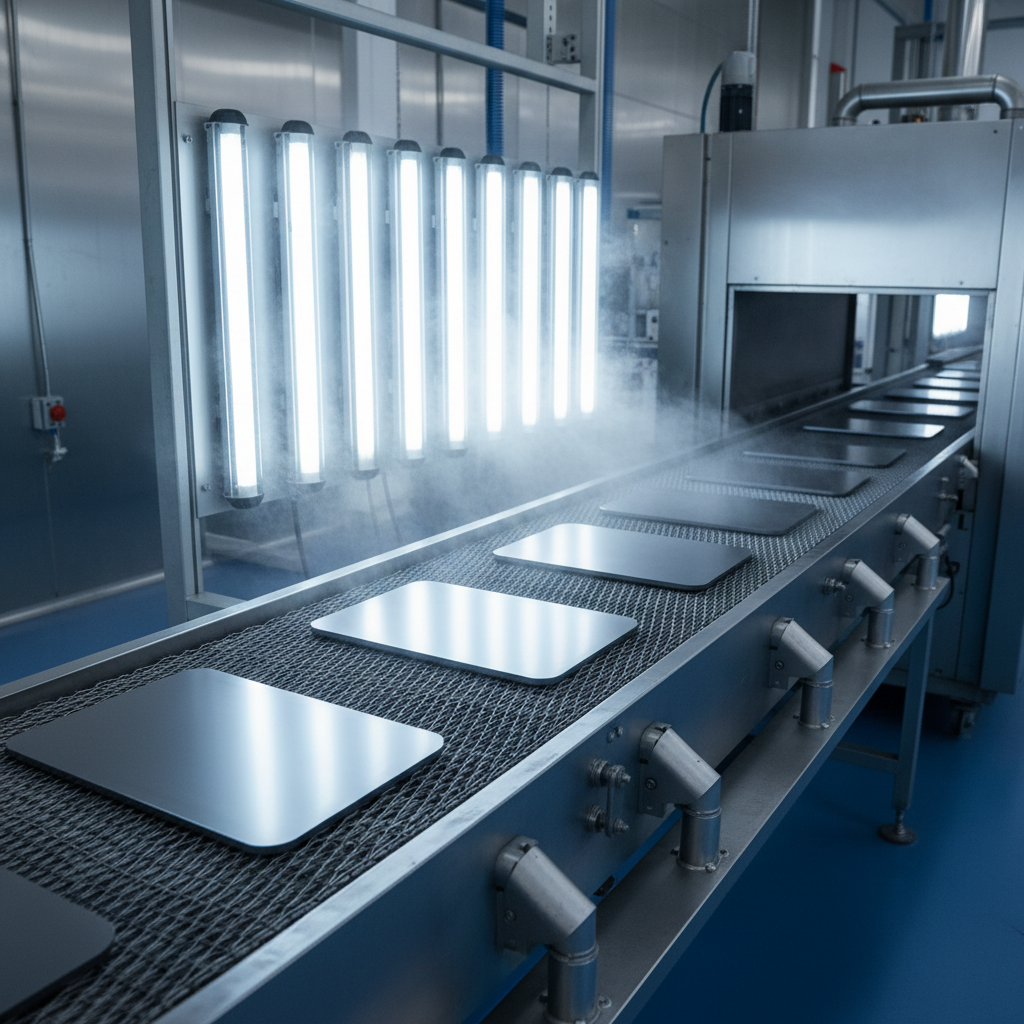
How to Reduce Surface Friction and Cure Industrial Coatings Faster
Two challenges shape the value of any industrial coating: how well it performs once applied, and how efficiently it can be applied in the first place. Surface friction drains energy and wears down components, while slow or high-temperature curing limits production speed. This guide covers both — how to reduce friction, and how rapid-curing coatings make that performance practical at scale.
Part 1: Reducing surface friction in industrial applications
Why friction matters
Wherever parts slide, rotate, or rub together, friction reduces efficiency and shortens component life. Cutting friction improves both operational efficiency and durability — but only if the coating itself can withstand continuous mechanical contact.
Using low-friction coatings
One effective approach is an engineered coating designed for low surface resistance. Nanize, a materials company based in Narvik, Norway, develops polysilazane-based coatings for this purpose. Unlike traditional solutions, Nanize coatings are PFAS-free and are customisable to confer specific desired performance such as anti-adhesion, non-wetting, extremely low coefficient of friction and other properties with no harmful chemicals.
The company positions reduced friction as a measurable operational benefit. Its coatings not only resist scratches and chemical degradation but also significantly reduce surface friction, improving operational efficiency across industries.
Why adhesion is critical for friction reduction
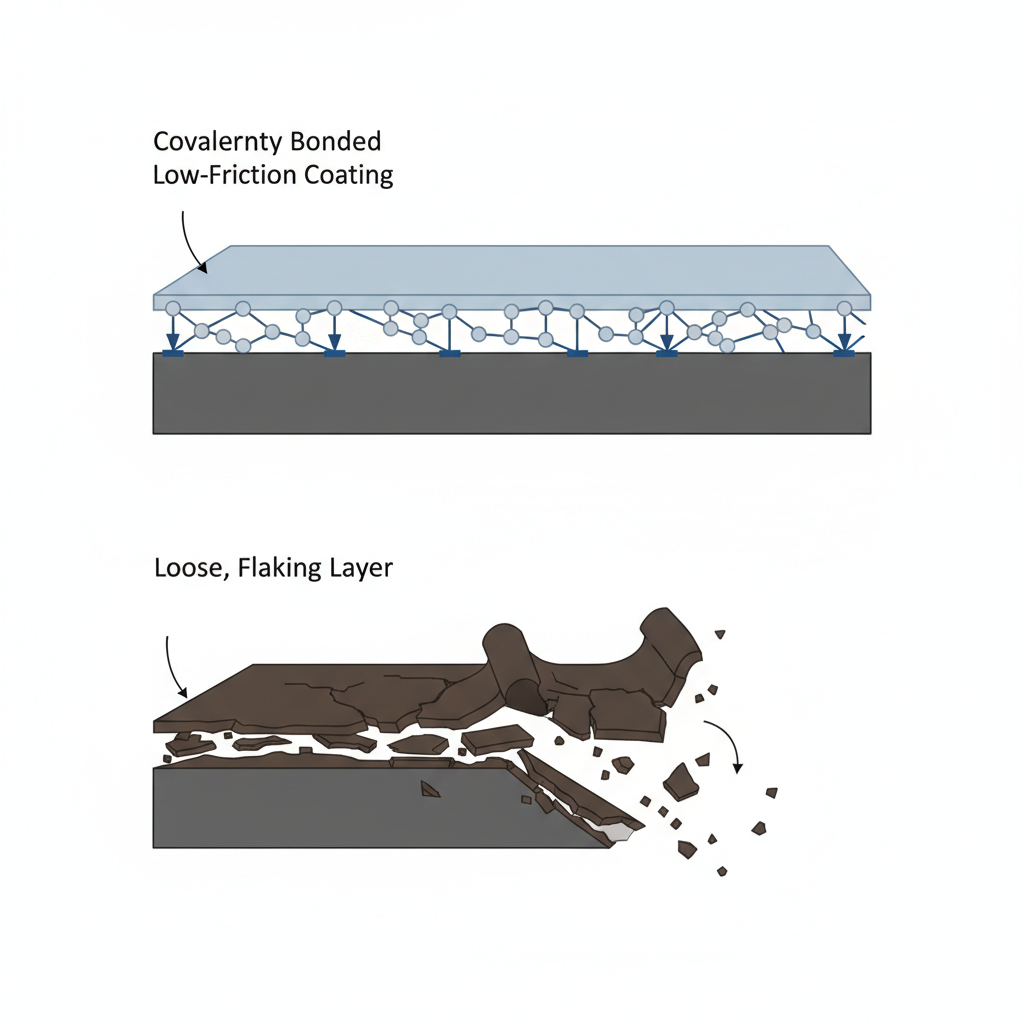
A low-friction surface only delivers value if it stays bonded under repeated contact. The durability and long-life of Nanize coatings is achieved through excellent cross-linking during the curing process, combined with covalent bonding to the substrate to prevent flaking and delamination in use.
Tailoring to industrial conditions
Industrial environments vary widely, so adjustable formulations help. From lightweight electronics to heavy-duty industrial machinery, Nanize tailors each formulation to match specific performance needs.
Part 2: Rapid-curing industrial coatings
Why curing speed and temperature matter
A coating is only practical if it cures at the speed of the production line. Faster curing increases throughput, while lower curing temperatures allow application to heat-sensitive substrates and reduce energy use.
The curing problem Nanize set out to solve
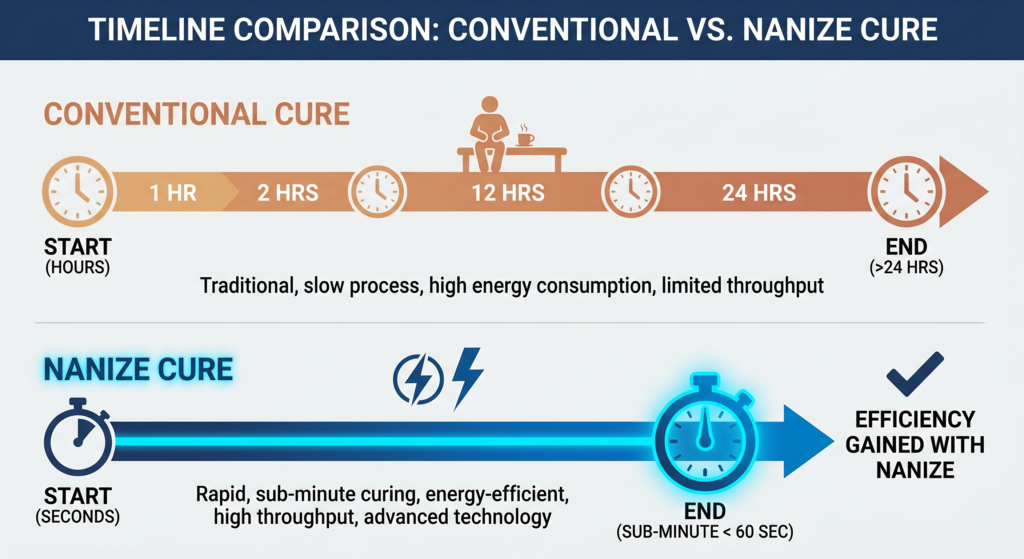
Nanize frames curing as the long-standing bottleneck for polysilazane coatings. Nanize recognised that the excellent potential of polysilazane coatings has been constrained by the ability to achieve a high cross-linking density on curing. Its stated solution is that the patented technology developed by Nanize achieves near-perfect cross-linking and covalent bonding to the substrate through hydrolysis of polysilazanes in under 1 minute and below 70°C.
The verified rapid-curing performance
Nanize states its curing speed and temperature directly. Nanize coatings fully cure in under 1 minute below 70°C to create market leading hard scratch-resistant long-life coatings. It also describes catalyst-free ultra-rapid fully hard curing times of less than 30 seconds.
The company reports test evidence for this. Complete curing in 30 seconds at 70°C is evidenced by FTIR spectrometry of Nanize polysilazane coatings applied by ultrasonic spray to stainless steel and aluminium, noting the absence of Si-H and N-H on the cured samples, with a corresponding strong Si-O-Si. Nanize also reports that, having made over 20,000 individual tests, extensive lab validation has been undertaken, including by FTIR, to verify polymer crosslinking, hard curing, durability and performance.
The production benefit
Faster, cooler curing improves throughput and lowers energy use. Nanize’s coatings fully set at temperatures below 100°C, drastically reducing production cycles, and consume less energy than high-temperature curing processes.